

Christmases in the “good old days” were always held at Grandpa and Grandma Neal’s, northeast of Dexter, Iowa. I don’t know how good it was for the grownups, but it was great for us dozen or so cousins.
It probably wasn’t so wonderful for our moms and aunts because they’d spent the morning “slaving in the kitchen,” as my mother called it. But at least they didn’t have to slave over the whole meal–just their own individual specialties.


Mom’s specialty was the rolls. That meant getting up especially early because rolls made the day before were not acceptable.
The Neal clan always ate at noon–on the dot. The rolls had better be ready. We were usually the last ones there, so the rolls would still be warm.
When my folks were newly married, Neals suggested that Mom bring noodles. That’s easy, she thought, and took a package of noodles. Oh dear, they’re not cooked, someone said. Looking back, she thinks she was expected to make the noodles from scratch, like any decent housewife, and to bring them cooked in rich chicken broth besides.
Mom was raised in a Depression-era family in town. They couldn’t afford to buy what they couldn’t raise in their garden or her dad and brothers bring home from squirrel or rabbit hunting. Making noodles for a family with seven kids was also extra work, so they never had noodles.
One thing we had every Christmas was Grandma Neal’s round raisiny slabs of suet pudding. At first I didn’t like it that much, but I liked the golden brown sauce she spooned over each slice. I think the recipe came from the “old country,” where Grandma’s parents were born.


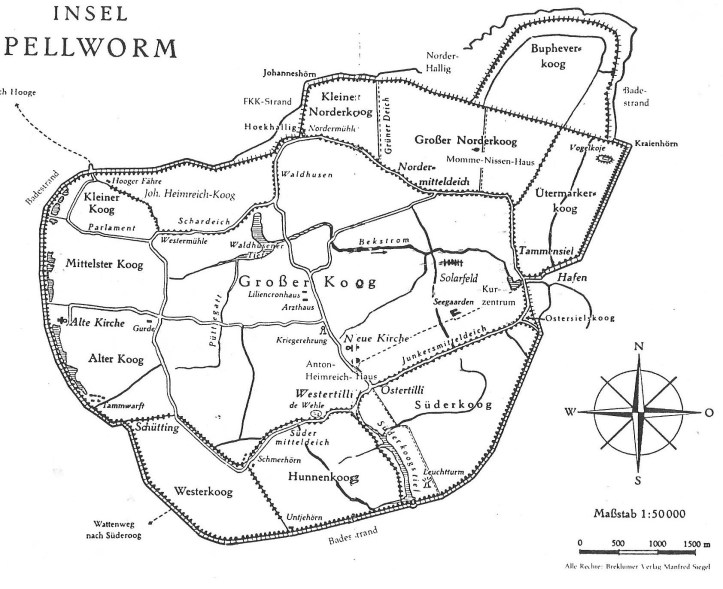
Above is Grandma Neal’s mother Anna Marie (Ohrt) Blohm, and the Pellworm house that the Ohrt family owned.


I asked Grandma to send me the recipe so I could keep part of the tradition alive anyway. She sent a list of the ingredients. Suet. Hmm, just what is suet? I think I had to ask for it at the store. And she said she cooked hers in smooth baking powder cans she’d saved from year to year. That explained the round slices. I didn’t have any baking powder cans so just used clean ones from carrots or green beans.
But that last line: “Steam until done.”


Steam? Maybe this was Grandma’s secret recipe and she didn’t really want to share it.
We didn’t have the internet in those days. We lived in a trailer court a mile from town, partway to Mountain Home Air Force Base. We had one car. I must have driven into the library after Hubby got home because I learned what steaming meant. Believe it or not, I ended up arranging the cans on a rack in the deep fat fryer we’d gotten for a wedding present. I added water and they steamed.
It tasted pretty much like Grandma’s, but what a lot of work! A rigamarole, my dad would have called it.
While we lived way out in Idaho, I became interested in genealogy. I learned that both of Grandma Neal’s parents had been born on Pellworm Island, Germany, and that they’d come to America in the 1870s on the ship Thuringia. Perhaps the suet pudding recipe came with one or both families on that ship.


I’ll bet I never made suet pudding again, but I sure knew how to make applesauce and spice cake. Adding raisins would make it a little more like Grandma’s traditional dessert, and it was a whole lot easier. She called the topping “hard sauce,” but it was basically a thickened brown sugar topping.
Ladling that sauce over a spice cake just out of the oven reminds me of Christmases at Grandpa and Grandma’s back during the 1950s.

